


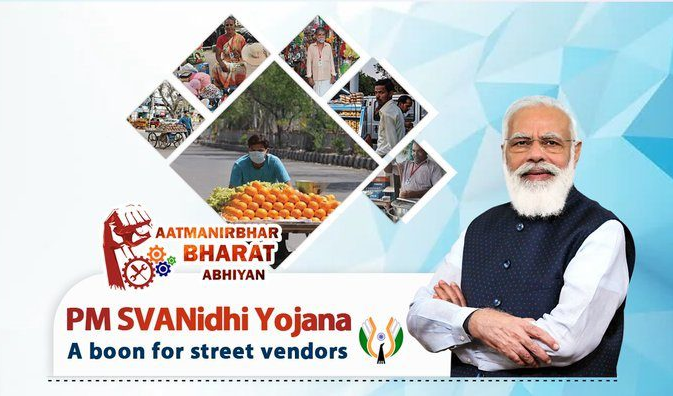
PM SVANidhi
1. Contextual Backdrop: From Pandemic Relief to Permanent Financial Infrastructure
The PM Street Vendor’s AtmaNirbhar Nidhi (PM SVANidhi) scheme represents a landmark intervention in India’s urban governance, specifically targeting the vulnerabilities of the informal urban economy. Historically, street vendors have occupied a precarious position characterized by asymmetric information and a lack of formal documentation, which rendered them "credit-invisible" to traditional banking institutions. By establishing a state-backed credit channel, the scheme serves as a strategic bridge, transitioning micro-entrepreneurs from the exploitative cycles of informal moneylending to the stability of the formal financial ecosystem.
Marking its sixth anniversary since its launch on June 1, 2020, the scheme has undergone a significant evolution in its policy trajectory. As per the Ministry of Housing and Urban Affairs (MoHUA), this milestone signifies a transition from a "survival-centric" pandemic response to a "self-reliance" (AtmaNirbhar) framework. What was initially conceived as a crisis-mitigation tool has been institutionalized into a permanent pillar of India's financial infrastructure, aimed at fostering long-term economic dignity and entrepreneurial growth.
Institutional Framework of PM SVANidhi:
- Launch Date: June 1, 2020
- Nodal Ministry: Ministry of Housing and Urban Affairs (MoHUA)
- Collaborating Department: Department of Financial Services (DFS)
- Implementing Partner: Small Industries Development Bank of India (SIDBI)
- Scheme Classification: Central Sector Scheme (100% Central Government funding)
This foundational structure facilitates a unique credit delivery mechanism designed to mitigate systemic risks while incentivizing fiscal discipline among the urban poor.
2. Institutional Framework and Core Mechanics of PM SVANidhi
The architecture of PM SVANidhi is predicated on the understanding that collateral-free credit is essential for low-income demographics who lack tangible assets. By providing working capital without collateral, the scheme effectively addresses the "last-mile" delivery bottleneck. A critical innovation is the use of progressive loan tranches, which act as a behavioral nudge. By rewarding timely repayment with access to higher credit limits, the scheme assists vendors in building a formal credit history—often for the first time—thereby enhancing their future bankability.
|
Feature
|
Specifications
|
|---|---|
|
Progressive Loan Tranches
|
Stepped credit access in tranches of Rs 15,000, Rs 25,000, and Rs 50,000.
|
|
Interest Subsidy
|
7% per annum credited quarterly upon timely or early repayment.
|
|
Digital Incentives
|
Monthly cashback rewards for vendors engaging in digital retail/wholesale transactions.
|
|
Financial Deepening
|
Provision of UPI-linked RuPay Credit Cards (up to Rs 30,000 limit) after the second tranche.
|
The Small Industries Development Bank of India (SIDBI) manages the technical infrastructure and the credit guarantee trust fund, ensuring a seamless interface between vendors and lending institutions. Furthermore, the scheme integrates Capacity Building & Entrepreneurship Development through collaborations with organizations like the FSSAI, which provides training in food safety and hygiene. The extension of the lending period to March 2030 underscores a commitment to reaching a target of 1.15 crore vendors, signaling that financial credit is only the first step toward a broader socio-economic transformation.
3. 'SVANidhi se Samriddhi': Beyond Credit to Holistic Social Security
In the realm of public policy, "convergence" refers to the integration of disparate departmental interventions to create a comprehensive safety net. The 'SVANidhi se Samriddhi' initiative operationalizes this by ensuring that credit access is supplemented by social protections. This approach recognizes that without insurance or food security, a single health shock can deplete a vendor's working capital, forcing them back into poverty.
The initiative utilizes the data captured during the loan application process to conduct a detailed socio-economic profiling of over 50 lakh vendor families. This profiling identifies gaps in welfare coverage and facilitates a "single-window" integration into 8 core central government welfare schemes:
- Insurance & Pension: PM Jeevan Jyoti Bima Yojana (Life), PM Suraksha Bima Yojana (Accident), and PM Shram Yogi Maandhan (Pension) for the unorganized sector.
- Financial & Food Security: PM Jan Dhan Yojana (Universal banking) and One Nation One Ration Card (ONORC) for portable food security.
- Maternal & Labor Welfare: Janani Suraksha Yojana (Institutional delivery), PM Matru Vandana Yojana (Nutrition), and registration under Building and other Construction Workers (BoCW).
By leveraging the digital footprint created during credit processing, the state can identify and mitigate systemic vulnerabilities with surgical precision.
4. Impact Analysis: Evaluating Economic and Social Outcomes
For the purposes of administrative evaluation, the focus shifts from "outlays" (budgetary allocations) to "outcomes" (measurable socio-economic changes). PM SVANidhi has demonstrated that targeted micro-credit can drive the large-scale formalization of the economy.
- Credit Deepening: Remarkably, 95% of beneficiaries are first-time formal credit seekers. This indicates the successful dismantling of barriers that previously excluded the informal sector from the banking fold.
- Social Equity & Inclusion: The scheme serves as a potent tool for social justice, with 46% women representation and 70% of beneficiaries hailing from marginalized communities (SC/ST/OBC).
- Digital Public Infrastructure (DPI): With 841 crore digital transactions executed by 55 lakh onboarded vendors, the scheme has created a massive "digital footprint." This data allows for "alternative credit scoring," enabling banks to assess the creditworthiness of vendors based on transaction volume rather than traditional collateral.
Stat Box: Six-Year Performance Metrics
- Loan Volume: 1.12 Crore+ loans sanctioned.
- Beneficiary Reach: 75.5 Lakh+ unique street vendors.
- Economic Uplift: 20% average annual increase in beneficiary income.
- Social Security Impact: 1.52 Crore+ welfare benefits delivered through convergence.
The data confirms that the scheme has moved beyond mere pandemic relief to become a driver of micro-entrepreneurial mobility and urban stability.
5. Competitive Exam Essentials: Summary and Practice MCQs
Distilling complex governance data into actionable insights is crucial for both Preliminary (factual) and Mains (analytical) exam stages.
UPSC-Relevant Takeaways:
- Central Sector Status: Fully funded by the Union, reflecting its strategic priority.
- SIDBI’s Role: Beyond lending, it acts as the technical manager of the credit guarantee framework.
- Entrepreneurship Development: Integration with FSSAI highlights the shift toward quality standards in the informal economy.
- Formalization: The transition of 95% first-time borrowers is a key metric for "Financial Inclusion" essays.
- Digital Footprint: Illustrates the practical application of India's Digital Public Infrastructure in poverty alleviation.
Practice MCQs
Question 1: Consider the following statements regarding the PM SVANidhi scheme:
- It is a Centrally Sponsored Scheme implemented by the Ministry of MSME.
- The Small Industries Development Bank of India (SIDBI) acts as the implementation partner.
- The scheme provides for interest subsidies on timely repayment of loans.
Which of the statements given above are correct?
A) 1 and 2 only
B) 2 and 3 only
C) 1 and 3 only
D) 1, 2, and 3
Answer: B. Statement 1 is incorrect as it is a Central Sector Scheme under the Ministry of Housing and Urban Affairs (MoHUA).
Question 2: With reference to 'SVANidhi se Samriddhi', which of the following is its primary objective?
A) To provide interest-free loans of up to Rs 1 Lakh for business expansion.
B) To provide training in food safety and hygiene in collaboration with FSSAI.
C) To map socio-economic profiles and link beneficiaries to core welfare schemes.
D) To provide permanent vending zones in all Smart Cities by 2030.
Answer: C. It focuses on holistic welfare by profiling families and linking them to 8 core schemes like PMJJBY and ONORC.
Question 3: Under PM SVANidhi, the interest subsidy provided to vendors for timely repayment is:
A) 3% per annum
B) 5% per annum
C) 7% per annum
D) 9% per annum
Answer: C. A 7% annual interest subsidy is credited to the vendor’s account to encourage financial discipline.
Final Statement: As PM SVANidhi pursues its 2030 target of reaching 1.15 crore vendors, it remains a definitive case study in utilizing digital financial infrastructure to empower the informal urban economy.
Click here to
Read More

Are you sure?
You want to delete this comment..!
Remove
Cancel